


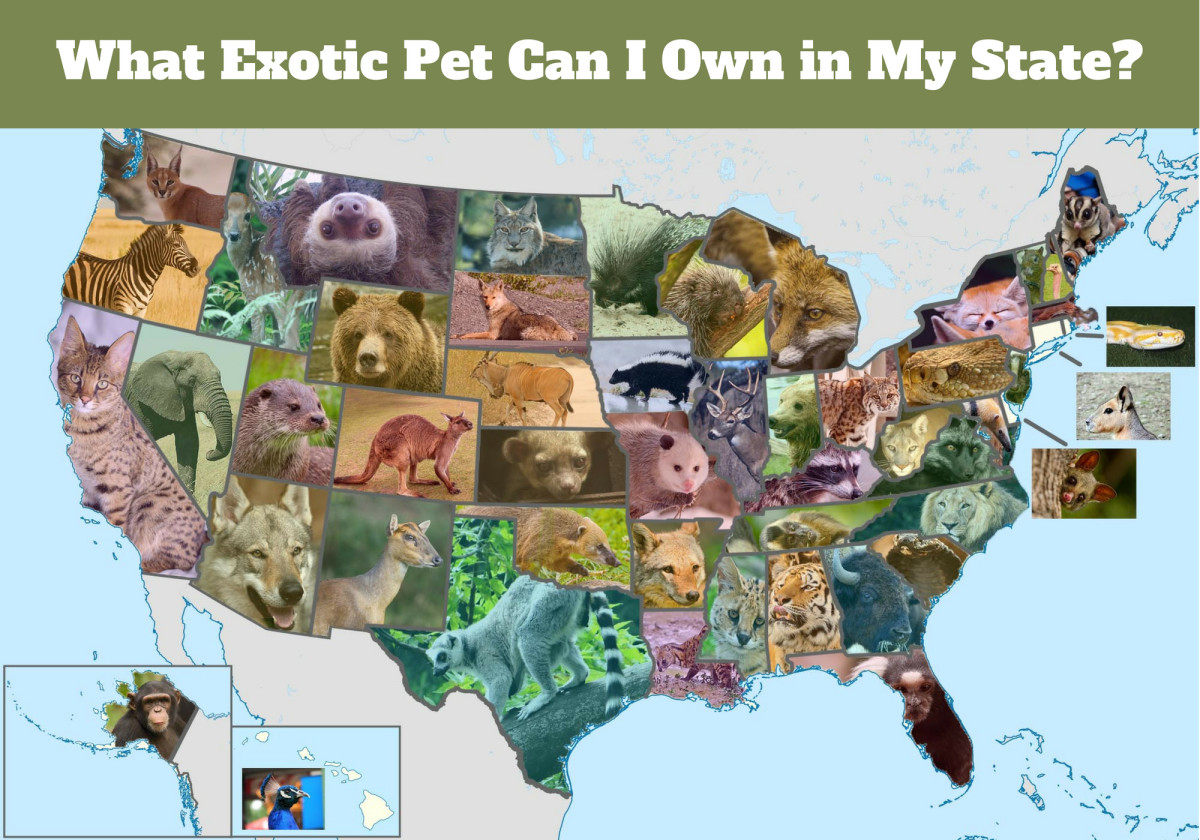
Exotic pets continue to grow in popularity across the United States, but legality depends heavily on where you live. Unlike cats and dogs, exotic animals are regulated at the state and local level, meaning the same animal may be legal in one state and completely banned in another.
This guide explains which exotic pets are legal in key U.S. states, why restrictions exist, and what future owners should consider before acquiring an exotic animal.
what exotic pets are legal in california
California has one of the strictest exotic pet laws in the United States. The state prioritizes public safety, environmental protection, and animal welfare.
Commonly illegal exotic pets in California
- Big cats (lions, tigers, leopards)
- Non-human primates (monkeys, chimpanzees)
- Large constrictor snakes (e.g., pythons, anacondas)
- Venomous reptiles
- Wolves and wolf-dog hybrids
- Most non-native wild mammals
Exotic pets that may be legal or conditionally allowed
- Certain reptiles (bearded dragons, leopard geckos)
- Small non-dangerous birds
- Some fish and invertebrates
- Domesticated hybrid animals under strict rules
Key takeaway: In California, if an animal is considered wild, dangerous, or invasive, it is usually prohibited. Always check California Department of Fish and Wildlife regulations and local city ordinances.
what exotic pets are legal in texas without a license
Texas is known for being one of the more permissive states, but “legal” does not mean “unregulated.”
Exotic pets commonly legal without a license
- Hedgehogs
- Sugar gliders
- Ball pythons and other non-venomous snakes
- Certain lizards (e.g., iguanas, tegus)
- Small exotic birds
Animals that require permits or registration
- Big cats
- Bears
- Non-human primates
- Large or dangerous wildlife
Texas also allows counties and cities to set stricter rules, so legality can vary by location.
Key takeaway: Texas allows many exotic pets without a license, but dangerous species almost always require registration and insurance.
what exotic pets are legal in arizona
Arizona has moderate exotic pet laws, balancing personal freedom with public safety.
Commonly legal exotic pets in Arizona
- Hedgehogs
- Sugar gliders
- Non-venomous reptiles
- Certain exotic birds
- Small mammals such as kinkajous (with conditions)
Restricted or prohibited animals
- Big cats
- Primates
- Crocodilians
- Dangerous wildlife without permits
Arizona often requires special licenses for animals considered wildlife or potentially dangerous.
Key takeaway: Arizona allows a variety of exotic pets, but permits are required for species that pose safety or ecological risks.
what exotic pets are legal in washington
Washington State follows a restrictive model, especially after past safety incidents involving exotic animals.
Exotic pets that are generally prohibited
- Big cats
- Bears
- Wolves
- Non-human primates
- Venomous reptiles
Pets that may be allowed
- Certain reptiles (non-venomous)
- Exotic birds
- Small mammals that are not classified as dangerous wildlife
Washington law strongly discourages private ownership of wild animals and emphasizes rescue and sanctuary models.
Key takeaway: Washington allows very few exotic mammals and enforces strict wildlife protection laws.
what exotic pets are legal in pa
Pennsylvania uses a permit-based system for exotic pets.
Commonly legal exotic pets
- Hedgehogs
- Sugar gliders
- Non-venomous reptiles
- Certain exotic birds
Permit-required animals
- Large cats
- Primates
- Dangerous wildlife species
Pennsylvania also requires facility inspections and documentation for permitted animals.
Key takeaway: Pennsylvania allows many small exotic pets, but larger or wild species require formal approval.
what exotic pets are legal in florida
Florida’s climate and ecosystem heavily influence its exotic animal laws.
Exotic pets commonly allowed
- Many reptiles (non-venomous snakes, lizards)
- Exotic birds
- Small mammals like sugar gliders
Highly regulated or prohibited
- Big cats
- Primates
- Large constrictor snakes (especially invasive species)
- Crocodilians
Florida uses a three-class wildlife system, with Class I animals (most dangerous) banned for private ownership.
Key takeaway: Florida allows many exotic pets, but invasive and dangerous species are tightly controlled.
what exotic pets are legal in georgia
Georgia has relatively permissive exotic pet laws, but recent updates have added restrictions.
Commonly legal exotic pets
- Hedgehogs
- Sugar gliders
- Non-venomous reptiles
- Exotic birds
Restricted or banned
- Big cats
- Primates
- Large dangerous wildlife
Georgia focuses on preventing public safety risks and illegal wildlife trade.
Key takeaway: Georgia allows many smaller exotic pets, but ownership of wild or dangerous animals is restricted.
Final Thoughts: Know the Law Before You Buy
Exotic pet ownership in the U.S. is highly state-specific and species-specific. Before purchasing or adopting an exotic animal, you should:
- Verify state and local laws
- Understand permit and licensing requirements
- Ensure proper housing and veterinary care
- Consider long-term welfare and ethical responsibility
At exoticpetsale.com, we believe responsible ownership starts with education. Laws change, so always confirm regulations with official state agencies before making a decision.