


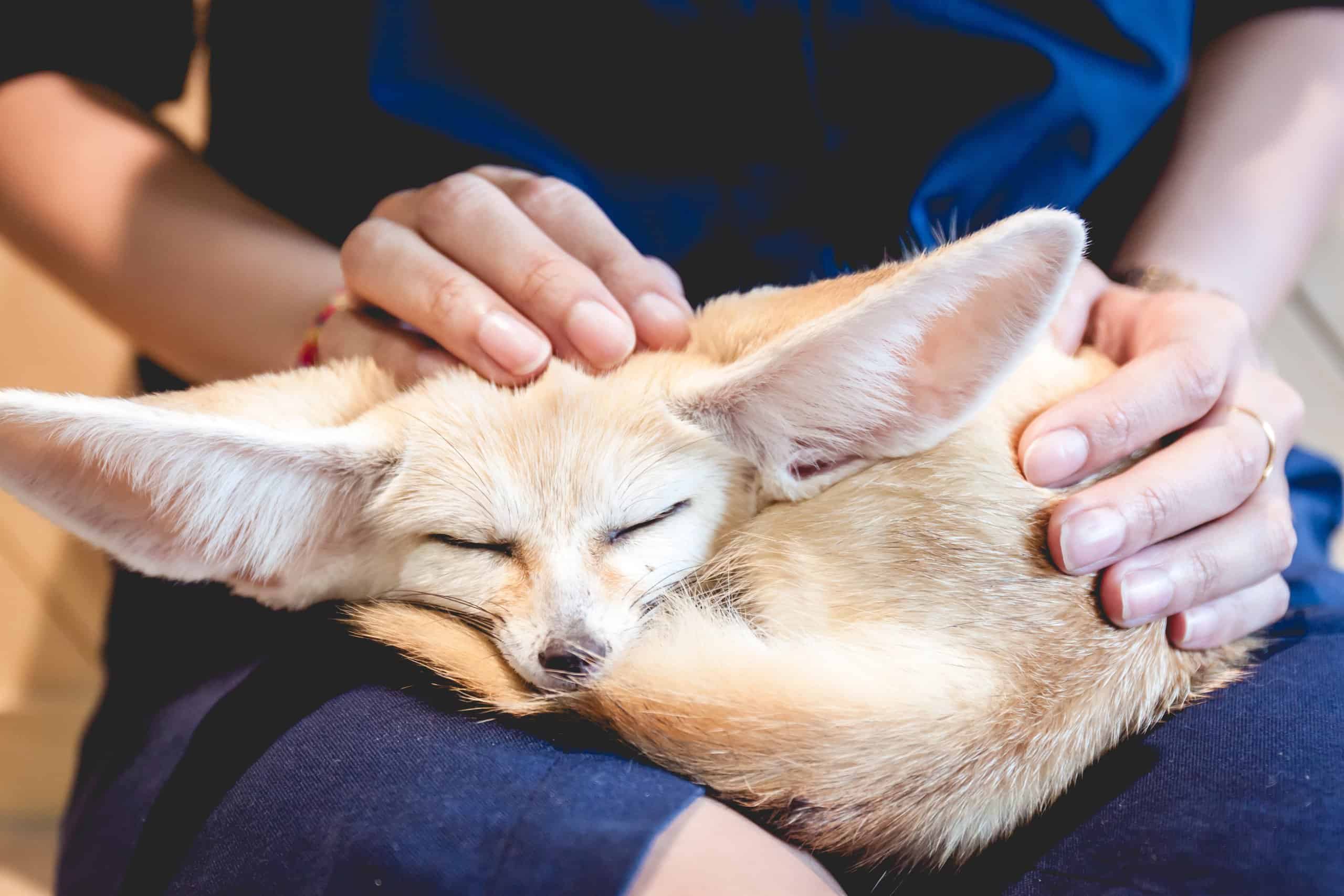
Fennec foxes (Vulpes zerda) are appealing exotic animals with their large ears, small size, and energetic personalities, but they are not typical pets like cats or dogs. They are wild, desert-adapted foxes that retain many natural instincts throughout their lives.
While some exotic pet owners report forming bonds with their fennecs, many experts and community members argue that these animals require specialized care, a lot of social interaction, and environments that mimic their natural habits — and that most typical household settings fail to provide this fully. As a consequence, keeping a fennec fox as a pet can be challenging, demanding, and ethically complex due to their active behavior, social needs, and nocturnal habits.
Fennec foxes also need entertainment, digging space, and structures to climb and explore — needs that go beyond what many casual pet owners are prepared to provide. Their nocturnal lifestyle means they are most active at night, which can conflict with normal household routines.
What do fennec foxes eat?
In the wild, fennec foxes have a varied diet that reflects their desert ecosystem. They eat:
- Insects like grasshoppers and locusts
- Small rodents and mice
- Birds and bird eggs
- Reptiles (such as lizards)
- Berries, roots, and fruits that help provide moisture and nutrients in arid conditions Environmental Research Institute
In captivity, responsible caretakers strive to replicate this nutritional balance by offering a combination of high-quality carnivore or omnivore foods, supplemented with insects, small meats, and occasional fruits/vegetables. Specialized diets help ensure they get the protein and fat they need without obesity or nutritional imbalances.
It’s also crucial that captive fennecs always have access to fresh water, even though their wild counterparts are adapted to survive on moisture from food. Shadow’s Reptiles
Can fennec foxes be pets?
Yes — but with important caveats. Fennec foxes can be kept as pets in some regions, provided their owners understand and meet their complex needs. They require:
- A secure, spacious environment
- High levels of enrichment and mental stimulation
- Exotic animal veterinary care (not every small animal vet can treat foxes)
- Consistent socialization
Because they are not domesticated animals, they retain strong natural behaviors like digging, scent marking, and nocturnal activity. Without adequate outlets for these instincts, they can become stressed, destructive, or depressed.
Moreover, regional laws vary widely — owning a fennec fox is legal in some areas but prohibited or highly regulated in others (see below). Always check and comply with local and national wildlife laws before considering ownership.
States where fennec foxes are legal
In the United States, federal law does not specifically prohibit keeping fennec foxes, but state and local regulationsdiffer significantly. Some states allow ownership with or without permits, while others ban it altogether:
States where fennec foxes may be allowed (without or with permit)
- Arkansas – legal with state rules
- Illinois, Indiana, Michigan, Nebraska, Ohio, Oklahoma, Tennessee, Virginia – generally permitted or allowed with some requirements
- Florida, Delaware, Maine, Missouri, North Dakota, Pennsylvania, Rhode Island, South Dakota, Wisconsin – ownership may require a permit or license
- New York – legal in many areas except certain cities (e.g., New York City) thepetzealot.com
States where fennec foxes are generally prohibited
- California, Colorado, Hawaii, Georgia, Maryland, Nevada, New Hampshire, New Jersey, New Mexico, Oregon, Vermont, Washington, West Virginia, Wyoming (for exotic fox species) and more have explicit bans or restrictions on exotic pet ownership.
Local zoning laws and city ordinances may further restrict or ban ownership even where the state allows it. In states that permit fennec foxes, specific health and housing standards — and sometimes exotic animal permits — are often required.
When do fennec foxes go in heat?
Fennec foxes have a distinct annual reproductive cycle:
- They typically become sexually mature between 9 and 11 months of age.
- Breeding or mating season usually occurs in winter to early spring, commonly between January and March.
- Females are in estrus (heat) for a short period — often only about 24–48 hours — during which mating occurs.
- After successful mating, gestation lasts around 50–52 days, after which the female gives birth to a litter of usually 1–4 pups.
- Both parents engage in rearing and feeding young, and pups are typically weaned and gaining independence by about 8–10 weeks of age. Wikipedia
This reproductive timing reflects their adaptation to desert life and seasonal resource availability.
Conclusion
Fennec foxes are remarkable animals with fascinating adaptations, but they are far from typical companion animals. Their high activity levels, unique dietary needs, and specialized behavioral patterns make them a demanding choice for pet ownership. Add to this the patchwork of legal rules across regions, and the decision to keep one as a pet should be made with full understanding of responsibilities and compliance with local laws.
Before acquiring a fennec fox, prospective owners must ensure they can provide:
- Proper long-term care
- Adequate housing and enrichment
- Veterinary support from exotic-animal professionals
- Legal documentation required by their jurisdiction
Fennec foxes are best suited to environments where their natural behaviors and needs can be met safely and ethically.